Why computer memory prices are so high (and whether there’s a “memory shortage”) – 2/11/2026
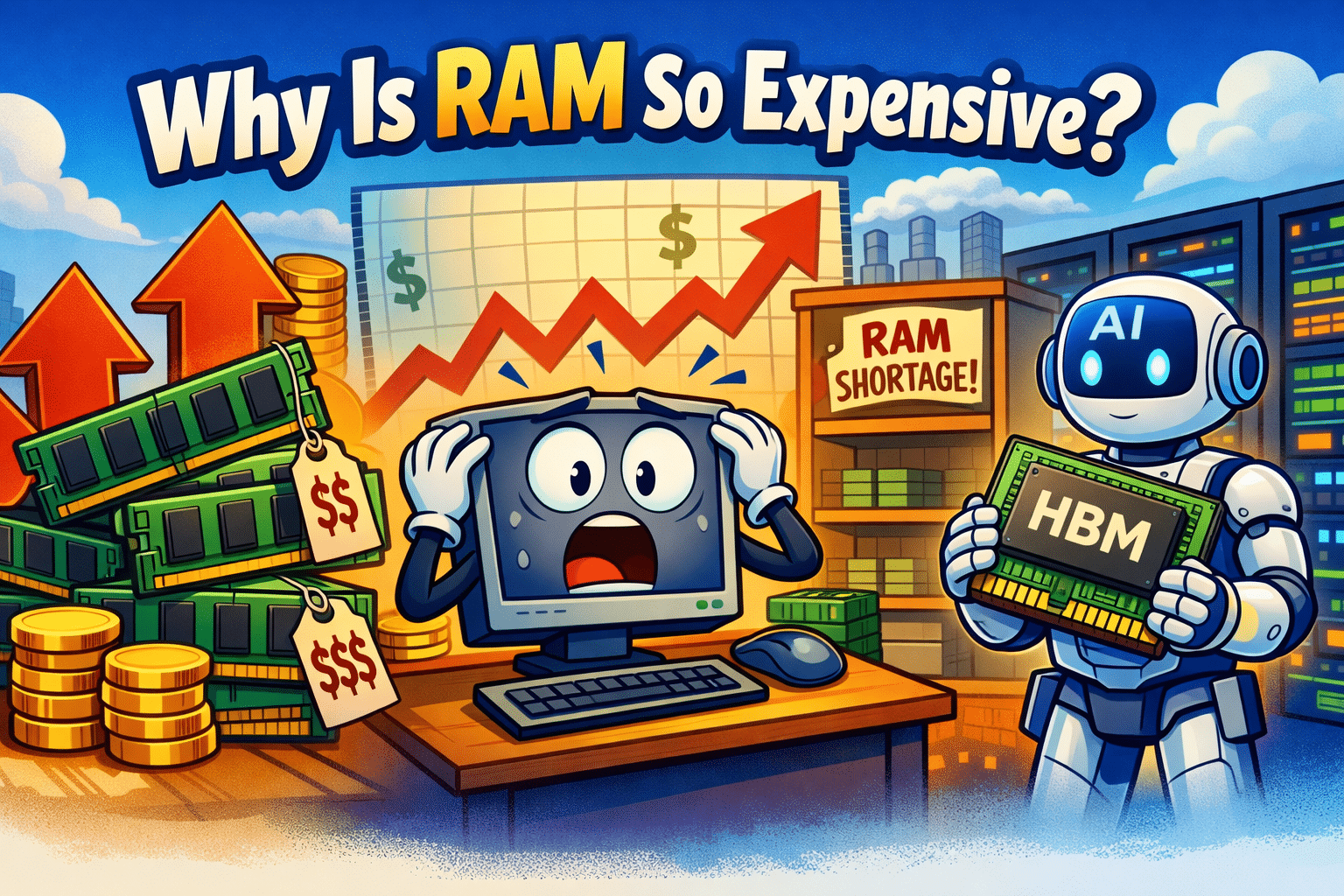
If you’ve priced out DDR4/DDR5 kits lately (or tried to build a gaming PC on a budget), you’ve probably asked the same thing: Why is RAM suddenly so expensive again? The short version is that memory is a global commodity market, and right now the forces pushing demand up and supply down are hitting at the same time—especially because of AI.
1) AI is consuming the “best” memory capacity—and reshaping the whole market
The biggest driver isn’t regular consumer PCs. It’s data centers and AI infrastructure. Modern AI accelerators need high-bandwidth memory (HBM) and huge volumes of server DRAM, and hyperscalers (the big cloud companies) are signing large contracts that lock up supply. Analysts have noted that the AI memory boom is squeezing availability for “legacy” and conventional DRAM products, which pushes prices higher across the board. (S&P Global)
Even if you’re buying normal desktop RAM, this matters because memory manufacturers allocate their limited production and packaging capacity toward the most profitable segments. When the industry prioritizes server and AI-related memory, the leftover supply for consumer channels tightens. TrendForce specifically pointed to AI and data center demand worsening the supply-demand imbalance and increasing suppliers’ pricing power. (TrendForce)
2) DRAM pricing is spiking at the contract level, not just retail markups
Retail prices can jump for lots of reasons (inventory, distributors, panic buying), but what’s different in this cycle is that contract pricing expectations are extremely aggressive. TrendForce upgraded its outlook and said conventional DRAM contract prices for 1Q 2026 could rise around 90–95% quarter-over-quarter, a massive revision upward. (TrendForce)
That kind of upstream move almost always finds its way into what consumers pay—sometimes immediately, sometimes after retailers burn through older inventory.
3) It takes years to add new memory capacity
When prices surge, people assume manufacturers can just “make more.” But bringing new wafer capacity online (or converting lines) is slow and capital-intensive. Industry commentary around the current AI-driven memory cycle emphasizes that new DRAM capacity takes a long time to build and ramp, which limits how quickly prices can normalize. (MarketWatch)
So even if manufacturers are increasing spending, supply doesn’t instantly appear.
4) The market is concentrated—and suppliers have more pricing discipline than in the past
DRAM is dominated by a small number of major producers. In tight markets, fewer suppliers can mean more disciplined supply behavior (less “flood the market” behavior), which supports higher pricing. TrendForce has also described suppliers strategically managing pricing and allocation amid low inventories and strong demand. (TrendForce)
5) DDR5 transition effects can add friction (and cost)
As the industry shifts platforms, there are periods where demand concentrates on certain densities and speeds (and certain chips/bins), and the supply chain doesn’t always match perfectly. Add in the fact that laptop memory (LPDDR) and server memory demand can outcompete DIY desktop demand, and you get sporadic shortages for the specific kits people actually want.
So… is there a memory shortage?
There isn’t one simple “everything is out of RAM” shortage like a natural disaster shutting down multiple fabs. But in practical terms, yes—there is a shortage of available conventional DRAM supply at prices consumers were used to, because AI/data-center demand is absorbing capacity and pushing contract prices sharply higher. (TrendForce)
What this means for regular PC owners (and what to do)
If you need RAM now (a failing stick, a client machine, a business PC), buy what you need and move on—waiting can backfire during fast spikes.
If you’re building a new PC, consider whether 32GB is truly necessary today vs. 16GB now and a planned upgrade later.
Keep an eye on reputable pricing indexes and avoid “panic scalper” listings (these pop up quickly in memory cycles). (Tom’s Hardware)
If you’re in Bloomington or the Twin Cities and you’re trying to decide whether upgrading RAM is worth it (or you’re not sure what your PC can actually support), Twin Cities PC Repair can help you choose compatible memory and install/test it properly—so you don’t waste money chasing the wrong kit during a volatile pricing cycle.
We use cookies to ensure that we give you the best experience on our website. If you continue to use this site we will assume that you are happy with it.

Recent Comments