Why Every Small Business Needs Proactive Computer Maintenance in 2025 – 11/19/2025
In today’s fast-paced digital world, technology is the backbone of small businesses. From managing customer data to processing online payments, nearly every part of a business depends on reliable computer systems. At Twin Cities PC Repair, we see firsthand how a single computer issue can disrupt daily operations, slow productivity, or even put sensitive data at risk. That’s why proactive computer maintenance has become one of the most essential strategies for business longevity in 2025.
The Rise of Hidden Threats
Cyberthreats have evolved drastically over the last few years. Gone are the days when viruses were the biggest concern. Today, small businesses face:
Ransomware attacks
Phishing attempts
Zero-day vulnerabilities
Hardware-based malware
AI-driven social engineering
Many attacks don’t happen in an instant—they quietly infiltrate systems and wait. Businesses often don’t realize something is wrong until data goes missing, systems crash, or strange network activity appears. Regular maintenance, updates, and monitoring can catch these issues before they become costly problems.
Performance Decline Is Often Preventable
A slow or unreliable computer is more than an annoyance; it’s a productivity killer. Employees lose hours every week to:
Long boot times
Freezing applications
Sluggish internet performance
Random reboots
Overheating systems
With proactive maintenance—cleanups, system optimizations, thermal management, driver updates, and software health checks—businesses keep their entire workflow running smoothly. At Twin Cities PC Repair, we often restore systems to “like-new” performance simply through deep-level tune-ups that aren’t accessible through basic user settings.
Reduce Repair Costs and Increase Lifespan
Most major hardware failures show warning signs long before they occur. For example:
Hard drives report failing sectors
Fans begin making subtle noises
Power supplies fluctuate
Thermal paste dries out
RAM produces intermittent errors
Catching these early saves businesses from catastrophic downtime and expensive replacements. With proactive care, you maximize your investment and extend the life of every workstation, laptop, or server.
Employee Productivity and Security Training
Not all threats or system issues are technical. Employee mistakes remain one of the biggest risks—whether it’s clicking a suspicious email link, using weak passwords, or installing unverified software.
As part of a proactive plan, Twin Cities PC Repair provides ongoing education, password security guidance, and recommendations for safe digital behavior. Training your team is just as important as securing your machines.
Remote Work Requires Stronger IT Support
With more remote employees in 2025, businesses must manage distributed systems. Proactive maintenance ensures:
Secure VPN access
Proper firewall configurations
Regular patching
Encrypted communication
Remote monitoring and troubleshooting
Whether on-site or working from home, your team stays protected and productive.
The Bottom Line
Proactive computer maintenance isn’t a luxury—it’s a strategic advantage. Small businesses that invest in ongoing system health avoid downtime, reduce long-term costs, strengthen security, and empower employees to do their best work.
At Twin Cities PC Repair, we offer tailored maintenance plans for businesses of all sizes. Whether you need monthly checkups or full-service monitoring, we can help you stay ahead of issues before they impact your workflow.
Consider booking your free consultation today! Visit my contact page to send me a message…
Hello from Twin Cities PC Repair! We hope you’re doing well. This week, we’re diving into a hot topic affecting many of our customers: Windows 10 End-of-Life and What It Means for Your PC.
What’s Going On?
Microsoft officially ended support for Windows 10 on October 14, 2025. (Windows Central)
That means no more security updates, no technical support, and increased risk if you continue to use Windows 10 past that date without taking precautions.
It’s not just a software issue — many users are upgrading hardware too, driving a surge in PC shipments. (IT Pro)
If you’re one of the many who still has a PC running Windows 10, here’s what you need to know (and what we can help you with).
Why This Matters for You
Security risks increase as vulnerabilities won’t be patched.
Software compatibility issues may crop up as developers target newer OS versions.
Hardware upgrades may become more appealing — whether it’s moving to a newer device or consolidating repairs.
If you’re thinking of reselling, recycling, or passing your PC on, you’ll want to securely erase data. (Windows Central)
In short — continuing to use Windows 10 “as is” is increasingly risky. But you have options.
What You Can Do About It
Here’s a checklist of steps you can take now or in the coming months:
Step
What to Do
Why It Helps
Upgrade to Windows 11
Move to a supported OS before your software or hardware runs into issues.
You’ll continue to receive security updates and support.
Backup Your Data
Make sure all your important files are backed up — external drive or cloud.
Prevent data loss if you change OS or device.
Securely Wipe Old Devices
If you’re retiring a Windows 10 PC, wipe drives using certified tools. (Windows Central)
Protect personal data from recovery by others.
Consider Hardware Upgrades or Replacements
Older machines may struggle with Windows 11 or modern workloads.
A newer or upgraded machine may run more reliably and for longer.
Audit Software Compatibility
Check whether the apps you use daily will work under Windows 11 (or newer).
Prevent surprises after getting your upgrade.
Consult a Professional
If you’re unsure whether your PC is capable of upgrading, or you want to migrate smoothly.
We can help assess your machine, migrate data, and perform the OS upgrade safely.
How Twin Cities PC Repair Can Help
At Twin Cities PC Repair, we’re ready to support you through the transition. Our services include:
PC evaluation to see whether your device is upgradeable or whether a replacement makes more sense
Data backup and migration to Windows 11
Secure data wiping & disposal of old devices
Hardware upgrades (RAM, SSD, etc.) to bring aging PCs up to speed
Clean & tune-up services to ensure optimal performance post-upgrade
If you’d like us to look at your machine and recommend a path forward (upgrade vs. replace), just reach out. We’re happy to provide a free estimate.
Other Maintenance Tips While You’re At It
While you tackle the OS upgrade, it’s a good time to refresh your regular PC maintenance routine:
Clean physical dust from vents and fans every 3–6 months to avoid overheating. (HP)
Run weekly malware scans and make sure antivirus is up-to-date. (ComputerCity)
Review startup programs and disable unnecessary ones for faster boot and responsiveness. (ComputerCity)
Keep at least ~15 % of your main drive free to allow headroom for updates and virtual memory. (NERDBOT)
These small steps help extend your PC’s lifespan and reduce unexpected issues.
Call to Action
If you’re ready to upgrade, or you’re just not sure what your best next step is, contact us for a free consultation.
I’ll evaluate your hardware, help with the upgrade path, and get you running safely on a supported OS.
Thanks for reading, and stay tuned for next week’s tips & tech updates.
Your Twin Cities Source for PC Sales, Speed, Safety & Support
1. SSD Upgrade vs. HDD Replacement: Speed, Durability & Energy Efficiency
Speed: SSDs can be up to 100× faster than HDDs, resulting in lightning-fast boot times, application launches, and data access—perfect for both everyday users and professionals.(Kingston Technology Company)
Durability: Solid-state drives are more resilient—no moving parts means less risk of physical failure and quieter operation.(Crucial, Avast)
Energy Efficiency: SSDs consume less power and generate less heat—ideal for laptops and energy-conscious desktops.(Crucial, primetechsupport.com)
HDD Still Useful: Traditional hard drives remain the most cost-effective option for high-capacity storage needs.(Crucial, Avast)
Planning an Upgrade? Consider this thorough migration guide for Windows 11 users—covers backup, cloning, BIOS settings, and verifying success.(IT Pro)
2. Cooling System Failures & Overheating Solutions
Why Overheating Happens: Dust, failing fans, dried-out thermal paste, and inadequate airflow are common offenders.(Avast)
Quick Fixes:
Shut down and let your system rest—sometimes, a cold reboot helps.(Avast)
Use compressed air to clear dust from fans, vents, and heatsinks.(Dr. Phone Fix)
Ensure proper airflow: keep desktops on flat, hard surfaces, laptops elevated and clear of soft surfaces.(Avast, Dr. Phone Fix)
Thermal Paste Tips: Apply a small, rice-grain-sized dot, then gently spread—avoid over-application. Improper application can worsen heat issues.(Instructables, Super User)
When to Call a Pro: If fans won’t spin, noises persist, or overheating continues, Twin Cities PC Repair can perform deep cleaning, fan replacement, and paste reapplication.
3. Data Recovery After a Crash: Best Practices & Tools
Crash Causes: Failures often result from wear and tear, mechanical faults, or logical errors—not necessarily malware or disasters.(Acronis)
DIY Tools:
TestDisk: Great for recovering lost partitions or repairing corrupted tables.(Wikipedia)
PhotoRec: Recovers a wide array of file types without writing to the damaged drive.(Wikipedia)
Other Tools: Try TestDisk and PhotoRec from a separate storage device to avoid overwriting data.(Salvation DATA)
When Professionals Are Needed: If hardware is damaged, or DIY tools fail, professional recovery can significantly improve success chances—especially when data is critical.(The Lab, Fields Data Recovery)
4. Windows 11 Compatibility & TPM 2.0 Support
TPM Requirement: Windows 11 requires TPM 2.0 (Trusted Platform Module) for enhanced security features like BitLocker and Windows Hello.(Microsoft Support, Lifewire)
How to Check:
In Windows Security: go to Settings → Update & Security → Device Security and verify the “Security processor” section.(Microsoft Support)
Or run tpm.msc from Run—check the Specification Version under TPM details.(Microsoft Support, NinjaOne)
Enabling TPM:
Reboot into UEFI/BIOS via Settings → Recovery → Advanced options → UEFI Firmware Settings.
Find TPM options (labels like “PTT”, “fTPM”, “Security Device”) in BIOS and enable. Then reboot and recheck.(Microsoft Support, NinjaOne)
Note: TPM via USB or external devices is not supported by Windows 11.(Microsoft Learn)
Benefits: Even older systems (post-2014) likely have TPM built-in; enabling it strengthens system security and future-proofs your machine.(Lifewire)
Additional Tools: If needed, guides exist to convert MBR to GPT and enable Secure Boot/TPM. Always backup before making firmware changes.(Windows Central)
As Windows 10 approaches its end of support (October 2025), many of our customers are asking: “Can my current computer handle Windows 11?” It’s a critical question for both home and business users, and Twin Cities PC Repair is here to help you navigate the transition smoothly.
Why Are Hardware Requirements Stricter for Windows 11?
Windows 11 brings enhanced security, improved performance, and new features, but it also requires newer hardware to support these advancements. Microsoft has implemented strict hardware requirements to ensure better protection against modern cybersecurity threats and to deliver a more reliable user experience.
Key Hardware Requirements for Windows 11:
Processor: 8th Generation Intel Core or newer, or select AMD Ryzen 2000 series or newer CPUs
Graphics Card: DirectX 12 compatible with WDDM 2.0 driver
Display: 9″ or larger with HD resolution (720p)
Why Upgrade?
Running unsupported hardware not only prevents you from upgrading to Windows 11, but it also exposes your system to potential security vulnerabilities once Windows 10 support ends. Upgrading ensures you stay protected, receive important updates, and take advantage of the latest features and performance improvements.
What Are Your Options?
Upgrade Existing Hardware (if eligible): Some systems may only need minor upgrades (such as adding TPM 2.0 support, increasing RAM, or replacing storage drives).
Purchase New Hardware: In many cases, particularly with older 6th and 7th generation Intel systems, replacing your PC may be the most cost-effective long-term solution.
We Can Help!
At Twin Cities PC Repair, we offer free hardware evaluations to determine if your system is Windows 11 ready. If upgrades or replacements are needed, we can provide affordable options tailored to your needs and budget.
Don’t Wait Until the Last Minute!
With the deadline approaching, now is the perfect time to assess your systems and plan ahead. Avoid downtime and unexpected costs by contacting us today.
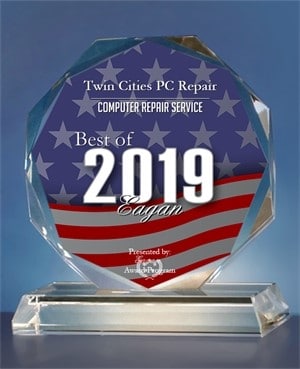
Twin Cities PC Repair Receives 2019 Best of Eagan Award
Eagan Award Program Honors the Achievement
Patrick Jensen (Owner)
EAGAN October 14, 2019 — Twin Cities PC Repair has been selected for the 2019 Best of Eagan Award in the Computer Repair Service category by the Eagan Award Program.
Each year, the Eagan Award Program identifies companies that we believe have achieved exceptional marketing success in their local community and business category. These are local companies that enhance the positive image of small business through service to their customers and our community. These exceptional companies help make the Eagan area a great place to live, work and play.
Various sources of information were gathered and analyzed to choose the winners in each category. The 2019 Eagan Award Program focuses on quality, not quantity. Winners are determined based on the information gathered both internally by the Eagan Award Program and data provided by third parties.
About EAP
The EAP is an annual awards program honoring the achievements and accomplishments of local businesses throughout the Eagan area. Recognition is given to those companies that have shown the ability to use their best practices and implemented programs to generate competitive advantages and long-term value.
The EAP was established to recognize the best of local businesses in our community. Our organization works exclusively with local business owners, trade groups, professional associations and other business advertising and marketing groups. Our mission is to recognize the small business community’s contributions to the U.S. economy.
More Than A Virus, Common Malware to Watch Out For…
The term “virus” is often used to describe many different types of infection a computer might have. Virus, when used as a blanket term, can describe any number of potential computer programs. What these programs have in common are they are typically designed to cause damage, steal data, or spread across the network.
Malware describes software designed to act maliciously on a personal computer. The name ‘malware’ is a shorthand for ‘malicious software’ and describes exactly what it is. A computer virus is a single type of malware that can cause harm to your PC, but it is only one of many.
Adware
Short for advertising-supported software, adware is a type of malware that delivers advertisements to your computer. These advertisements are often intrusive, irritating, and often designed to trick you into clicking something you don’t want. A common example of malware is pop-up ads that appear on many websites and mobile applications.
Adware often comes bundled with “free” versions of software that uses these intrusive advertising to make up costs. Commonly it is installed without the user’s knowledge and made excessively difficult to remove.
Spyware
Spyware is designed to spy on the user’s activity without their knowledge or consent. Often installed in the background, spyware can collect keyboard input, harvest data from the computer, monitor web activity and more.
Spyware typically requires installation to the computer. This is commonly done by tricking users into installing spyware themselves instead of the software or application that they thought they were getting. Victims of spyware are often be completely unaware of its presence until the data stolen is acted on in the form of fraudulent bank transactions or stolen online accounts.
Virus
In technical terms a computer virus is a form of malware that is installed inadvertently, causing damage to the user. A typical virus may install a keylogger to capture passwords, logins, and bank information from the keyboard. It might steal data, interrupt programs, and cause the computer to crash.
Modern virus programs commonly use your computers processing power and internet bandwidth to perform tasks remotely for hackers. The first sign of this can be when the computer sounds like it is doing a lot of work when no programs should be running. A computer virus is often spread through installing unknown software or downloading attachments that contain more than they seem.
Ransomware
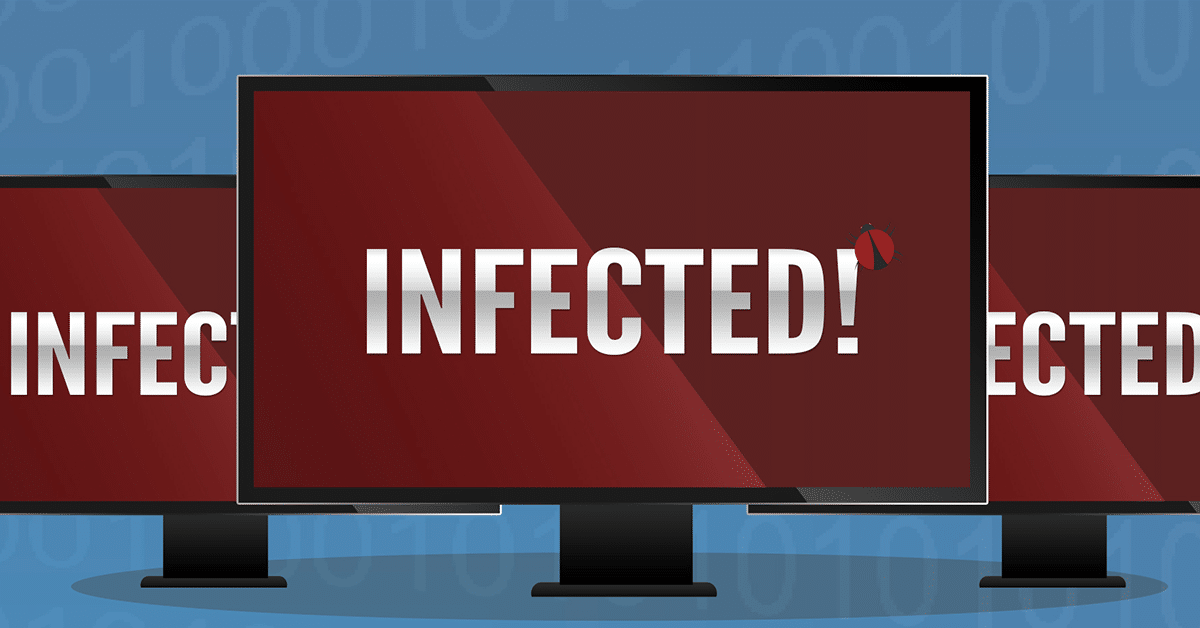
A particularly malicious variety of malware, known as ransomware, prevents the user from accessing their own files until a ransom is paid. Files within the system are often encrypted with a password that won’t be revealed to the user until the full ransom is paid.
Instead of accessing the computer as normal, the user is presented with a screen which details the contact and payment information required to access their data again.
Ransomware is typically downloaded through malicious file attachments, email, or a vulnerability in the computer system.
Worm
Among the most common type of malware today is the computer worm. Worms spread across computer networks by exploiting vulnerabilities within the operating system. Often these programs cause harm to their host networks by consuming large amounts of network bandwidth, overloading computers, and using up all the available resources.
One of the key differences between worms and a regular virus is its ability to make copies of itself and spread independently. A virus must rely on human activity to run a program or open a malicious attachment; worms can simply spread over the network without human intervention.
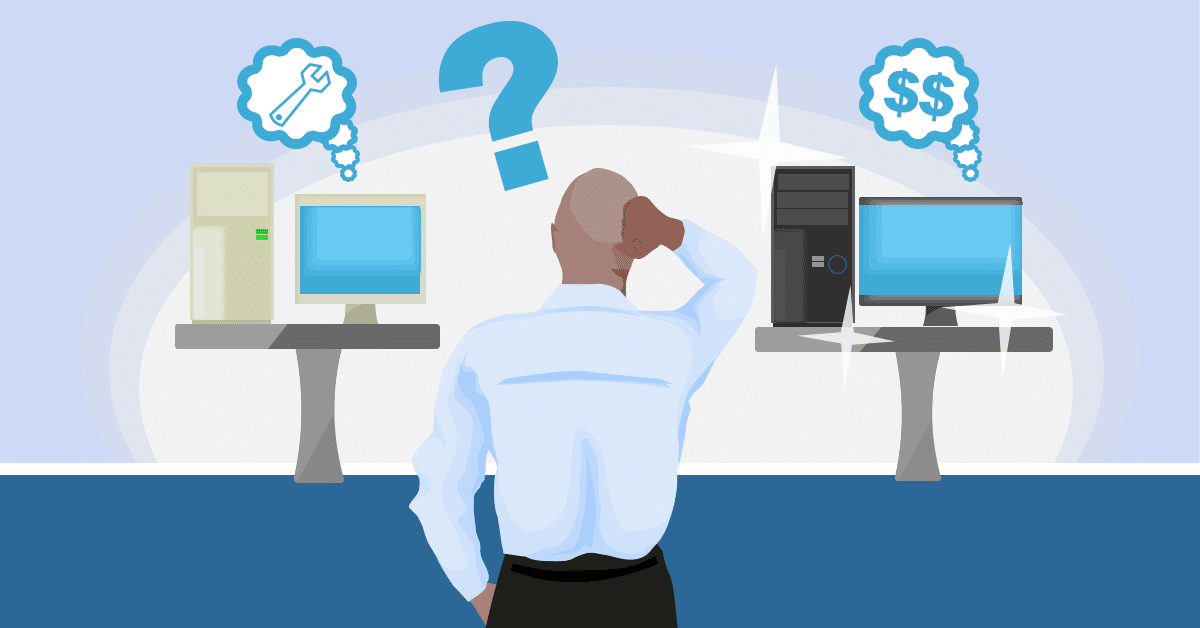
Should You Repair, Upgrade, or Replace Your Computer? Like many valuable things we buy, new computers suffer from wear and tear over time. Our computers are particularly vulnerable as we have placed more and more demands on them every year. New machines have gotten faster, quieter, more reliable, and more capable over time. At the same time our own computers have begun to slow and sometimes even stop performing altogether.
There are many ways to address the problem of a PC which isn’t quite performing up to the task anymore. Whether frustratingly slow or no longer working; we are happy to take a look. When you bring your computer to us we will diagnose the condition and find a solution that works for you. Often times the simplest solution works best. A complex problem sometimes only needs a simple repair to get your home computer up and running like new again. Whether a small replacement part, loose wire, or bad connection; we will find and fix the problem to give your familiar, home machine a new lease of life.
Many computers come to us running slowly, taking a long time to start up, or freezing when trying to load files and programs. Often owners have reached breaking point and become convinced the machine is fit for only the scrap heap. In many cases, the problem can be pinpointed to a bottleneck in the system. A single, seemingly trivial, part can be holding up the entire system. Amazingly, upgrading just that one component can make the whole machine run like new again.
Adding memory can provide extra space for programs to run faster. Adding an updated, faster hard drive can allow files to be retrieved without delay. In both cases, a low-cost single component can provide a cost-effective solution that makes an old machine like new again.
In some cases, computers succumb to more major faults. A critical part, difficult to replace, may stop working altogether. A failure of the motherboard for example, the backbone that all other components connect to can be expensive, if not impossible, to fix. Typically, with the fast-paced and ever-changing nature of computing, a motherboard will only house computer parts that were manufactured around a similar time.
A motherboard is almost certain to be incompatible with components built just a couple of years before or after its own design for example. Occasionally even a motherboard failure can be resolved too. In these cases we strive, whenever possible, to find a replacement board of the same generation that will work alongside existing components. The result is a cost-effective solution that keeps cost down by saving replacement parts.
In cases where a like-for-like replacement motherboard is not available, many parts of the computer may have to be replaced at the same time. Often replacement costs in these cases can get close to, or even exceed the cost of buying a new machine.
We would always give advice where it makes sense financially and practically to consider replacing an old machine. Often, in this respect, a home PC can be considered a little like a car. Sometimes a simple, non-expensive, easy to replace component such as the window wiper can fail. While a crucial part to be used for driving; it would be silly to suggest replacing the vehicle once it has worn out.
A window wiper may be low-cost and simple to replace, but if the engine were to wear down or break the solution may not be quite as simple. Attempting to make a 30-year-old car as fast, safe, and reliable as a brand new model generally doesn’t make any financial or practical sense. Sometimes the best course of action to save money and avoid breakdowns is a more up to date vehicle.
In computing, many of the same rules hold true. The best solution in each case is always tailored personally to fit you and your own computer.
Bring your machine in to us or give us a call us at (651) 456-8655 to discuss your computer issues or visit our Contact page HERE. We’ll keep you informed about your machine and advise on the best course of action to get you up and running as quickly as possible.
We use cookies to ensure that we give you the best experience on our website. If you continue to use this site we will assume that you are happy with it.






Recent Comments